History
Heritage and tradition of the south
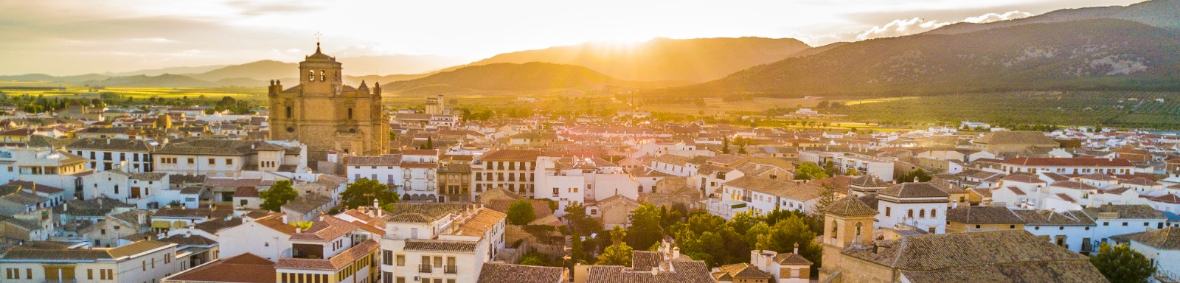
THE APOSTOLIC MEN, S. TORCUATO AND FACE RETAMA (GUADIX)
According to tradition, the apostolic men were seven disciples of the apostles Peter and Paul who, after being consecrated as bishops, were sent by them to Hispania to preach the word of Jesus in the 1st century. These men were: Torcuato, Segundo, Indalecio, Tesifonte, Eufrasio, Cecilio and Exiquio. They travelled from Rome to the coast of Baetica and arrived at the colony of Julia Gemela Acci (Guadix). According to tradition, weary from their journey, they stayed on the outskirts to rest, sending some of the disciples into the city to buy provisions. As the festivals of Jupiter, Mercury and Juno were being celebrated there, they were not well received by the gentiles, but treated with hostility, They were forced to flee and were pursued to the river Fardes, where they were miraculously protected by the collapse of the Roman bridge, and their pursuers perished. In view of this miraculous event, they were welcomed in Acci by the matron Luparia, who converted to Christianity, asked to be baptised and built a church and a baptistery.
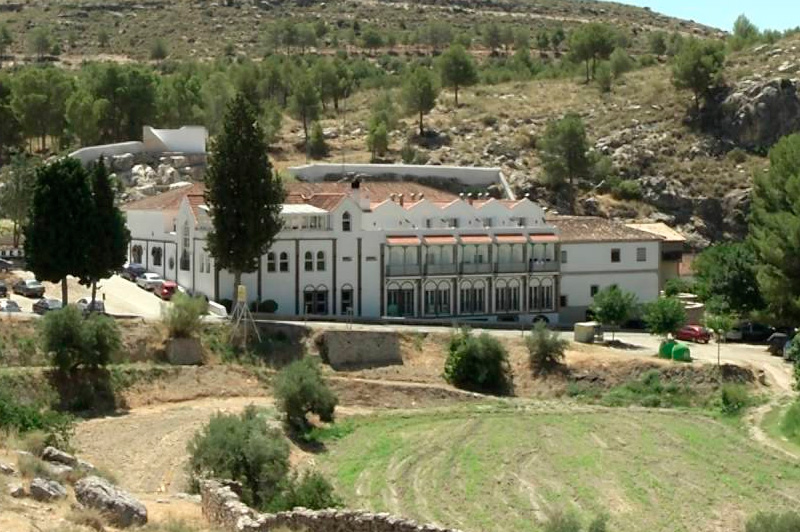
Subsequently, the men dispersed to different locations to spread Christian doctrine. Torcuato remained in Acci (Guadix); Tesifonte went to Vergi (Berja); Indalecio went to Urci (Pechina); Segundo went to Abula (Abla according to some and Ávila according to others); Eufrasio went to Iliturgi (Andújar); Cecilio went to Ilíberis (Elvira or Granada), and Esiquio went to Carcesa (Cazorla). It is an ancient tradition that St. Torcuato, after having suffered many trials in a holy manner, was martyred by the pagans in the place known as Face Retama, two leagues from ancient Acci, where there is a hermitage and some underground caves in which he was buried. It was a deeply rooted belief among the inhabitants of those lands that at night a light appeared, commonly known as the "fire of St. Torcuato", in the same place where he suffered martyrdom. In addition, next to the saint's tomb there was an olive tree that every year on the eve of the saint's feast day was covered with more flowers than leaves, outside its flowering season, and on the morning of 15 May it produced as many olives as the devotees could carry, with whose oil they cured their illnesses and ailments.
THE VIRGIN OF PIETY OF BAZA AND CASCAMORRAS (BAZA)
Devotion to Our Lady of Mercy in Baza dates back to the end of the 15th century. Shortly after Baza was taken from the Moors, Don Luis de Acuña built a chapel on the ruins of an old Mozarabic church. In 1523, this chapel was handed over to the Order of Mercy and converted into a convent, whose Mercedarian friars promoted the worship and devotion to the Virgin of Mercy. In 1593, there is evidence of the existence of a brotherhood of the Virgin of Mercy in Guadix, which attended the festival organised by the city of Baza every 8th of September.
According to tradition, after the reconquest of the city of Baza, a labourer from Guadix named Juan Pedernal was demolishing a wall in the ruins of an old mosque. While he was working, one of his pickaxe blows struck the wall and the man from Accitano heard a voice saying, "Have mercy on me." Juan continued chipping away and found a carving of the Virgin Mary embedded in the wall. As he was the one who had found it, he wanted to take it to Guadix, but when the people of Baza heard about this, they prevented him from doing so and claimed it as theirs because it had been found in Baza. After many disputes and lawsuits, an agreement was reached: if a commissioner from Guadix managed to enter Baza and reach the church of La Merced, where the Virgin of Mercy was located, without being spotted by the people of Baza, he could take the image to Guadix. This is the tradition that forms the basis for the festival of "Cascamorras".
HUÉSCAR AND THE VILLAGE OF DON FADRIQUE AND ITS PATRON SAINTS ALODÍA AND NUNILÓN (HUÉSCAR)
Huéscar and La Puebla de Don Fadrique share the patronage of the Navarrese saints Alodía and Nunilón.
How can saints from Navarre be the patron saints of two towns in the north of the province of Granada? In 1434, the Castilians launched a Christian incursion into the land of Huéscar, which became part of Castile, but shortly afterwards it was "reconquered" by the Muslims until, in 1488, after a series of capitulations, it returned to the hands of the Catholic Monarchs. In 1496, King Ferdinand the Catholic ceded Huéscar and its surrounding lands to his brother-in-law, Luis de Beaumont, Count of Lerín and Constable of Navarre.
Alodia and Nunilón were two martyrs from Osca, probably the territory of present-day Huesca. At the time we are concerned with, Huesca was closely linked to the kingdom of Navarre, and as the first lord of Huéscar was the constable of Navarre, it is possible that he populated his domain with Navarrese who brought with them to this land the devotion to the holy martyrs that had been very prosperous in Huesca and Navarre. Later, in 1580, La Puebla de Don Fadrique, the land of Don Fadrique Álvarez de Toledo, took the saints as its patron saints. The residents of Huéscar celebrate their festival on 22 October and those of La Puebla on 28 October. Both towns share their devotion to Saints Alodia and Nunilón, which culminates on the Monday following Pentecost Sunday, usually in May, with a large pilgrimage to the chapel located at the foot of the Sierra de la Sagra. In the days leading up to the pilgrimage, always at the weekend, there are open-air dances, a parade of floats, the election of the festival queen, regional dances and other activities. Throughout the year, the images of the saints spend some time in the main church of Huéscar and some time in the church of La Puebla.
CARAVACA AND ITS CROSS (CARAVACA DE LA CRUZ)
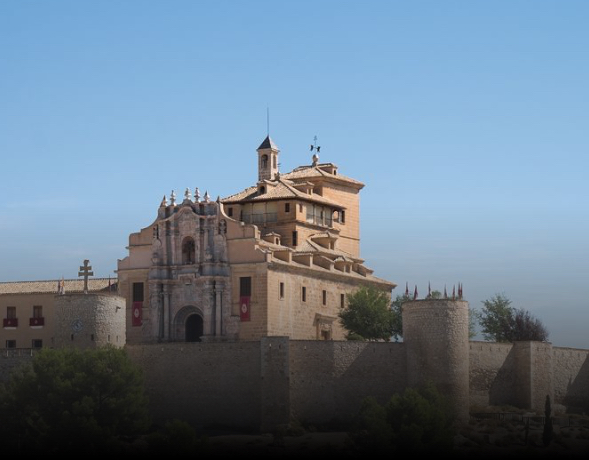
According to Christian tradition, the Cross of Caravaca is a relic of the Cross on which Jesus Christ was crucified and which was found by Saint Helena. It is kept in a reliquary in the shape of a patriarchal cross with two horizontal arms and one vertical arm in the Basilica of the Royal Alcázar of Vera Cruz in Caravaca de la Cruz (Murcia).
According to legend, the Cross was miraculously carried to the castle-sanctuary of Caravaca by two angels.
According to tradition, when Ceyt Abuceyt was emir of the city of Murcia, a group of Christian captives arrived in Caravaca. The emir asked the clergyman Ginés Pérez Chirinos, who was among them, what his profession was. He replied that his job was to celebrate Mass, so the emir ordered that everything necessary be prepared to satisfy his curiosity about the Christian ritual. When the priest said that he needed a crucifix for this purpose, two angels appeared, carrying the reliquary with the Lignum crucis, and placed it on the improvised altar. The miraculous apparition led the emir and his entire court to be baptised.
Eleven years after the appearance of the Cross, the kingdom of Murcia became a vassal state of the Castilian king Ferdinand III the Saint. The Cross served as a flag and talisman against further Andalusian attacks, especially those carried out by Muhammad ibn Nasr, emir of Arjona and Granada. With this, Caravaca would consolidate its position as a bastion of the Spanish-Islamic frontier.
Devotion to the Cross of Caravaca spread throughout the Christian world thanks to the Society of Jesus. The city celebrates the patron saint festivities of the Holy and True Cross from 1 to 5 May, recreating the city's medieval and religious past with events, processions and parades of Moors and Christians.
Ánimas, Cascaborras and Inocentes, a date with Easter in Puebla de don Fadrique. Anthropological and religious foundations of a Christmas celebration.
The burlesque nature of many of the popular festivals of the winter cycle, and more specifically those celebrated between Christmas and Epiphany, is beyond doubt and takes the form of humorous practices such as singing more or less funny songs or carols in itinerant groups that ask for Christmas bonuses; making noise with cowbells, bladders, whips; playing pranks such as moving flower pots or domestic animals; dressing up grotesquely as beasts, monstrous beings, devils or in the comical manner of harlequins or innocents; mocking and ridiculing neighbours through humorous proclamations or end-of-year wills; shaking up the hierarchical order by teasing the powerful, forcing them to submit to a festive authority, which they must obey temporarily; and in general, all kinds of festive revelry, with particular emphasis on comedy and role reversal.
In Andalusia, as in the rest of Spain, there are good examples of this type of festival, especially between 24 and 28 December, but the tradition is best preserved in Puebla de Don Fadrique (Granada), near the borders with Jaén, Albacete and Murcia.
Las fiestas comienzan con un pasacalle de la Hermandad de Las Ánimas y continúan en Nochebuena con la Misa del Gallo. LEARN MORE
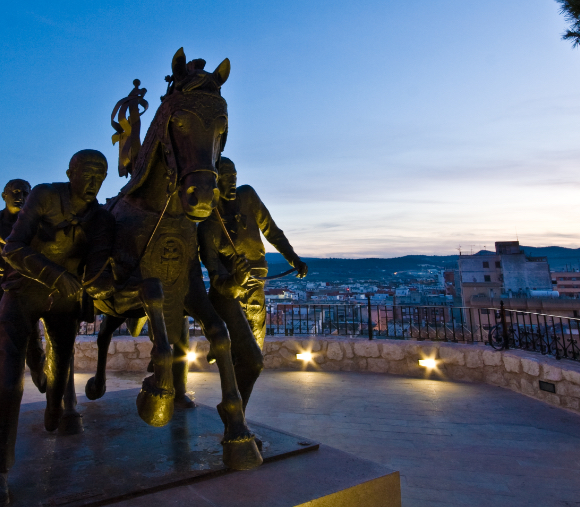
Monument to the Wine Horses
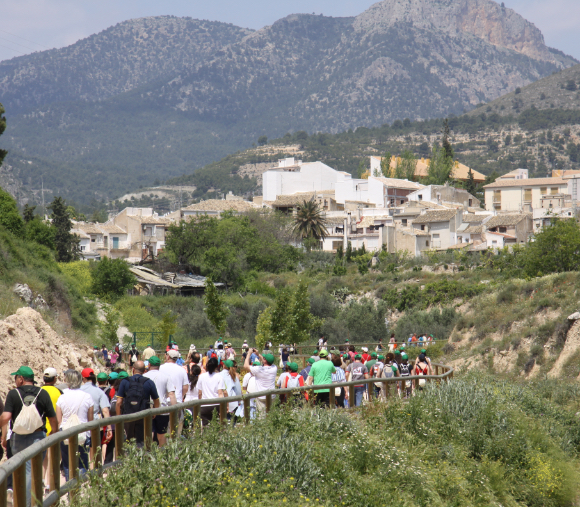
Pilgrims to Caravaca de la Cruz
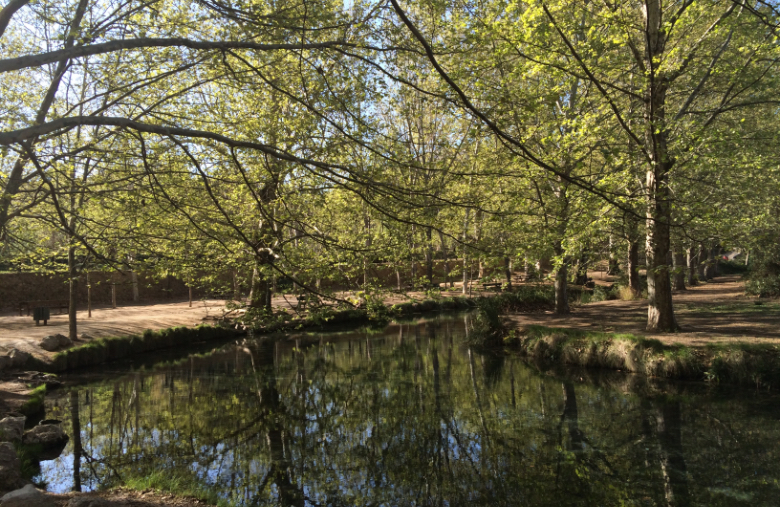
Fuente del Marqués Landscape
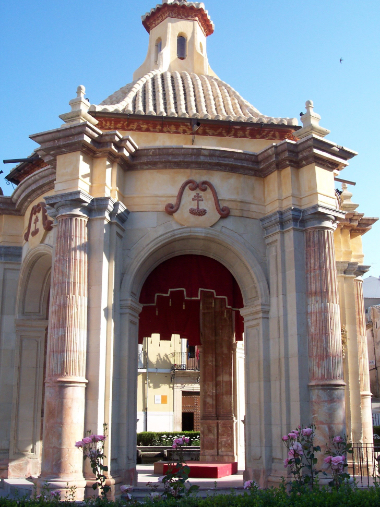
Gazebo