
Spirituality
Heritage and tradition of the south
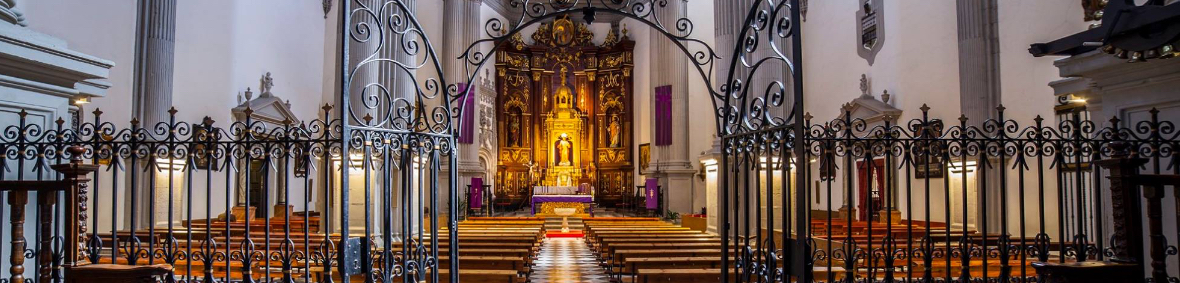
Thoughts at the end of each stage
Antonio Franco Rodríguez de Lázaro
Introduction
On the Southern Spiritual Route (CES), we will encounter many landscapes, monuments and churches that will nurture our spirituality, helping us to achieve the true goal of this journey, which is to undergo a personal transformation that brings us closer to God, as it is a path to salvation. It is a two-way itinerary between the Cathedral of Guadix, built in the first Spanish Episcopate, and the Basilica of Vera Cruz, located in the Holy City of Caravaca de la Cruz.
The three Abrahamic religions agree on the essential characteristics of what constitutes a pilgrimage, although each adds aspects that differentiate them. The first pilgrim in history is Abraham, who leaves the city of Ur of the Chaldeans to go to Canaan, the land of the Canaanites. He is a man on a journey, with a goal and a motivation.
In Hebrew, a pilgrim is someone who climbs, not someone who walks, because pilgrimage consists of climbing to Jerusalem. Climbing geographically and spiritually to the sacred place, with the effort of walking on foot, the meaning of the journey being the honest purification of man. The ritual of encountering God once had a place where it could be performed, but now there is no temple in Jerusalem, which produces nostalgia for a place that cannot be found, causing the pilgrimage to be carried out towards people, the collective, in total abandonment to God, as an expression of individual and family faith. In the offering of the lamb, there could be no food left over for the next day, which forced families to invite other people to finish it. The face of God was manifested through family unity and through the other person I meet along the way, with whom we will share our food. In this way, the pilgrim sees the face of God when he encounters it in the other.
For Muslims, the pilgrimage to Mecca is the fifth pillar of Islam, in which each pilgrim will have different experiences, the most important of which are ascetic in nature, because they lead to knowing God within ourselves. It is our hearts, not our persons, that must connect with God. Therefore, the greater the distance to be travelled, the deeper we must delve into the recesses of our souls. It is essential that this inner journey be undertaken in order to become a better person. It is about knowing God and having God with you, while at the same time experiencing the effort of communicating with others, as in this way we accept our belonging to a community of pilgrims, which reminds us of the annual, weekly or daily congregation. Pilgrimages are journeys of suffering and patience, in which we must shed our everyday clothes and don the pilgrim's garb; in this way, everyone's appearance is identical, reflecting that we are all equal, even though each person is unique. It is a return to our innate nature, like a child who rejoices in everything, feeling connected on the path to a God who provides love and embraces us.
Miguel Asín Palacios, explaining to the Sufis, speaks of a path "that leads to awakening and inner enlightenment, the path that must lead to the place of connection between external, physical reality and a dimension without time or space, which is experienced within the self. The path by which man transcends his individual self and reaches God. And where metaphysical knowledge or spiritual realisation will thus consist in the removal of the veils that separate man from God."
Christians are not obliged to go on pilgrimage, and when we do, it is to a specific shrine, motivated by an inner need and to give expression to our religious commitment. Pilgrims leave their comfort zone, where they feel safe because it is familiar and inspires confidence, to enter strange and unknown territory, which will contain manifestations of God and manifestations of the sacred. That is why we must be open to seeking God and receiving Him, while experiencing an inner transformation, praying and asking for forgiveness. Jesus is also a pilgrim, both because of his constant travels throughout a specific territory and because of his spiritual journey. The goal is Jerusalem and the motivation is the cross/resurrection.
Pope Francis says in the Plain of Ur, during his apostolic journey to Iraq in 2021, that life is a pilgrimage of a transcendental nature. We are passing through this common home, on a pilgrimage to eternal life, walking on earth with our eyes fixed on heaven. Similar to what Abraham had to face when he left his homeland, we are facing a steep path, on which we take concrete steps, journeying to discover the face of the other, sharing memories, glances and silences, stories and experiences.
First day
For many pilgrims, the journey will be a way to escape the closed, monotonous, even claustrophobic world in which we usually live. Now we are facing a personal adventure of endurance and survival in open spaces, under extraordinary and endless skies, forcing us to adapt to a new reality forged under the extreme heat of summer, the pleasant temperatures of autumn and spring, or the penetrating cold of winter, depending on the time of year. Sometimes alone and sometimes in groups, we have the opportunity to stray from the path and then find the right one, as it is all about living a thousand adventures and experiences.
The Southern Spiritual Way is a journey that will allow us to know and love God. Therefore, we must leave our problems and worries behind at the beginning of the journey, which will make us feel lighter. Now we will focus and enjoy the welcome of nature and the people of the places we visit, without forgetting the welcome of someone who will provide us with complete rest, because it incorporates truth, love, peace, healing and tranquillity into our lives. I am referring to the love of God, for He is the only one who is reliable, consistent and close to us, with such an immense understanding of each of our behaviours that only He possesses. God is always with us so that we can turn to Him at any time, because He has power over the present and the future; He is the guardian of justice.
The capacity to welcome also means that pilgrims must maintain an attitude of openness to change, gratitude and selfless giving, being willing to help others, because selfless giving is the only thing that truly fills our hearts.
We will end today's meditation with the words of Monsignor Víctor Manuel Fernández: "Come, Holy Spirit, awaken my inner life. Come and lift my heart in gratitude. The whole universe is a joyful praise to God the Father. The birds sing in adoration, the streams running between the hills adore him, the sun and moon shine in adoration. Help me, Holy Spirit, to share this joy of the entire universe. Teach me to live with the simplicity and joy of your simplest creatures. I want to rejoice in the colour of the stones, in the shape of the clouds, in the simplicity of the grass and the flowers. Holy Spirit, full of pure life, ever-new vitality. You have chosen to pour life into the universe, and that is why there is such a varied multitude of creatures. I too am a flame of life that you have chosen to ignite with your unlimited power. I thank you, Lord, for the miracle of my life, because you brought me out of nothingness. Because I might not exist, and yet here I am, sustained by your infinite power. Grant me, Lord, that I may value and enjoy this life you give me, that I may learn to enjoy it with joy and gratitude. Holy Spirit, may I rejoice today in contemplating each thing, recognising the beauty you have placed in all beings. Fill me with the cosmic joy that pervades all things, you who are the sublime Spirit that fills everything.
Psalm 22. God, shepherd of the righteous. Psalm of David.
The Lord is my shepherd,
I shall not want:
He maketh me to lie down in green pastures;
He leadeth me beside the still waters;
He restoreth my soul;
He guides me along the right path,
for the honour of his name.
Even though I walk through the darkest valley,
I fear no evil, for you are with me:
your rod and your staff comfort me.
You prepare a table for me
in front of my enemies;
you anoint my head with perfume,
and my cup runneth over.
Your goodness and your mercy accompany me
every day of my life,
and I will dwell in the house of the Lord
for years without a term.
Second day
We have reached this point feeling exhausted, more psychologically than physically, discouraged because our expectations regarding work, family, or friends have not been fully met. We want to feel secure in our connections with others, we seek affection and unconditional acceptance to compensate for our insecurities, we want to be considered valuable. We are on alert, with our hearts awake and our minds clear, to flee from a deceptive and unjust world that makes promises it does not keep.
This pilgrimage makes it easier to put our worries into perspective and to be sometimes relaxed and sometimes excited by the beauty of the landscape, so it is a good time to think about certain things. We can start by learning to regulate our emotions, clearly specifying our limits and the specific mistakes we make. It is also an opportunity to get in touch with the Spirit of God, the Holy Spirit, so that He can teach us to leave behind selfishness, pride, comfort or sadness, using our intelligence, creativity, experience and sensitivity. If we want to live a full life throughout our existence, God must be the protagonist of our spirituality. God's interest in meeting us is unlimited; we just need to let Him find us.
During the Camino, there will also be moments when we seek solitude and practise prayer, as both are essential in the process of spiritual growth. In this way, we can achieve greater degrees of simplicity, virtue, lucidity, strength, impetus, willpower, enthusiasm and determination. Until we achieve a mysticism that requires action and behavioural routines that serve as a guide and authority to control the four human emotions: love, fear, pleasure and hope.
Psalm 125. Thanksgiving in anticipation of the return from the desert
When the Lord changed the fate of Zion,
we seemed to be dreaming:
our mouths filled with laughter,
the language of songs.
Even the Gentiles said: <<El Mr
has been great with them>>>.
-The Lord has been great with us,
and we are joyful.
May the Lord change our fate,
like the streams of the Negeb.
Those who sow in tears
reap with songs of joy.
As they go out, they go out weeping,
carrying the seed;
when they return, they come back singing,
bringing their sheaves with them.
Third day
Contact with nature brings joy to our hearts, because it is an environment in which the events that distress us or affect us negatively are diluted. We are faced with a reality that helps to free us from indifference towards others, by making us participants in a multidimensional world, in which it is worth paying attention to the details of what appears before our eyes; that is why we will stop to admire the different species of animals, listen to the sound of water in streams and springs, approach a tree to embrace it, smell the scent of flowers, watch the shapes that the clouds take in the sky as they are moved by the wind, feel the earth beneath our feet as we walk, an earth that speaks to us, telling us its story, or see how the changing colours of the landscape influence our mood, while our minds are filled with multiple memories.
The power of nature lies in our perception of it as something so novel that we lack the words to explain it, because if we perceive it as a repetition to which we are already accustomed, it will mean nothing to us and become invisible. The same thing happens in our relationships with the people around us.
According to Saint Augustine, God revealed himself through the Book of Nature, with its orderly laws, and in the Book of Scripture, with its historical narratives and teachings. Nature is perceived as creation when we shift our focus from ourselves to seeing ourselves as immersed in a transcendence that speaks to us of a God who has built a cosmos in infinite space.
Nature appears to reveal different emotions to our senses. Some may overwhelm, amaze or bewilder us, while others will move us, harmonise us, encourage us and strengthen our respect for the earth, forests and animals, or simply appeal to us. It is similar to what happens with inner silence, which sometimes leads to mysticism, imposing peace, tranquillity, calm, expectation and serenity on the senses, but at other times, what predominates is impatience, agitation and a feeling of fire in the soul.
There will be moments when time slows down, allowing feelings we have always kept hidden to surface, enabling us to experience sensations more intensely, while stimulating our patience to see the world through different eyes, allowing the landscape to impose itself on all thought, while we feel uncertainty and a loneliness that challenges us. If we want to understand the meaning of creation, we must seek the truth within ourselves. By listening to our inner voice, we can get to know ourselves better, realise that we do not have all the answers to what life has thrown at us so far, and thus address the need to know what we really need to maintain our self-esteem and be happy.
All sections of the Camino provide the conditions for an encounter with God, because God likes to speak to the human heart when it has returned to the first part of creation, especially in the desert. God does not abandon his creation, which is why he created a desert that attracts and allows us to go further, in an atmosphere of silence in which he will communicate to us the hope he wants to apply to our doubts and concerns, thus ending the absence of his voice that we often experience in our lives. A noisy and confused heart cannot find God, which is why during our encounter with Him in the desert it will seem as if time stands still, even though space continues to flow, making it easy to accept and overcome the limitations that make us seem insignificant or superficial. It is the ideal situation for overcoming moments of suffering, hatred, violence, doubt or lack of love. The experience of God's presence on the journey is real.
Psalm 18. Hymn of praise to God
The heavens proclaim the glory of God,
the firmament proclaims the work of his hands:
day by day the message is passed on,
the night to the night whispers it to him.
Without them speaking, without them uttering,
without their voice resounding,
their proclamation reaches to the whole earth
and to the ends of the earth their language.
There he has pitched his tent in the sun:
he comes forth like a bridegroom from his chamber,
joyful as a hero, to run his course.
He appears at one end of the sky,
and his orbit reaches the other end:
nothing escapes his heat.
The law of the Lord is perfect
and gives rest to the soul;
the precept of the Lord is faithful
and instructs the ignorant;
the Lord's commands are right
and gladden the heart;
the Lord's rule is clear
and gives light to the eyes;
the Lord's will is pure
and eternally stable;
the Lord's commands are true
and entirely just;
more precious than gold,
than fine gold;
sweeter than honey
from a honeycomb that drips.
Although your servant watches
to guard them carefully,
who knows their faults?
Absolve me of what is hidden from me,
preserve your servant from arrogance,
lest it dominate me:
thus I shall remain free and innocent
of great sin.
May the words of my mouth be pleasing to you,
and may the meditation of my heart come before you,
Lord, my rock, my redeemer.
Fourth day
Silence does not only exist in the desert; silence can arise at any moment during the pilgrimage, prompted by the visual intensity of nature and its hidden mysteries, allowing us to listen to those who share the journey with us, as their comments, reflections and testimonies will serve as a reference point for us to see where we are in our lives and thus realise that there is much more than what we hear in the media or what our ever-changing feelings suggest. We can also share our silence with the silence of others, in those moments of waiting and availability that provide the encounter with others.
That is why this Way must take silence into account, a silence that makes us expectant, as there are apparently no noises that can anticipate the events that are going to occur. But that silence will soon be filled with sounds from the nature around us, the wind rustling the branches of the trees, the sound of our shoes on the ground, or the water flowing in the streams. An environment in which meditation takes on greater importance when it is not hidden or distorted by our words or the usual sounds of everyday activity.
Now is a good time to ask the Holy Spirit to remove from our lives everything that prevents us from being happy, such as selfishness, anxiety, fear, sadness, resentment, bad intentions and bad memories, as we breathe. Nature is a home for those who seek God, a personal oasis where we can ask ourselves questions about beauty, delicacy, and sensitivity derived from spirituality, whether individual or shared with others.
Psalm 149. Song to God and his people, executor of his designs
Alleluia!
Sing to the Lord a new song,
let his praise resound in the assembly of the faithful.
Let Israel rejoice in its Creator,
the children of Zion in their King.
Praise his name with dancing,
sing to him with drums and zithers.
For the Lord loves his people,
and adorns the humble with victory.
Let the faithful celebrate his glory,
and sing joyfully in rows:
with cheers to God in their mouths,
and double-edged swords in their hands;
to take vengeance on the peoples
and punish the nations,
binding kings with chains,
nobles with iron shackles.
To execute the sentence pronounced
is an honour for all his faithful.
Hallelujah!
Fifth day
We are on a pilgrimage that provides an abundance of images captured by our eyes of landscapes, cities, religious monuments and archaeological remains, which must be accompanied by reading the word of God, the revealed word, which is the true protagonist, to facilitate the encounter with God.
Dedicating time to God means listening to Him, placing our thoughts at His command, aligning ourselves with Him, waiting expectantly, taking seriously the responsibility we assume and, at the same time, feeling great joy at the happiness His presence brings, filling us with overflowing happiness accompanied by an inner peace that provides strength and moderation.
Australia's Aboriginal communities propose a relationship with others based on deep, silent inner listening, in which words are unnecessary. They have an intimate awareness of inner listening as they walk alongside others, which makes them conscious of the spirit of God. They believe that the contemplative path of deep listening extends throughout one's entire life, triggering renewal and inner peace, making the person whole and complete, filled with the Spirit of God. Finding peace in this silent awareness comes from sitting by the river, walking among the trees, or being in the company of others. We cannot rush the course of the river; we must move with its current and understand its ways, waiting for God's movement. His time is the right time. His way and will will be clear. We cannot live a good and useful life if we do not listen. Their method of learning consists of observing and listening, waiting for the right moment to act. They attach great importance to knowing how to be still and wait, without rushing things, letting them follow their natural course, like the seasons of the year. They listen and wait for God to make them understand, because His Word is a gift. A flower blooms when it is time, not necessarily when man desires it; it is nature's timing. Nothing can be rushed or shortened in God's creation.
Psalm 94. God invites us to keep the law
Come, let us acclaim the Lord,
let us cheer the rock that saves us;
let us enter his presence giving thanks,
cheering him to the sound of instruments.
For the Lord is a great God,
sovereign over all gods:
he holds the depths of the earth in his hand,
the peaks of the mountains are his;
the sea is his, for he made it;
the dry land, which his hands formed.
Come in, let us prostrate ourselves on the ground,
blessing the Lord our Creator.
For he is our God
and we his people,
the flock he leads.
May you hear his voice today:
<<Nor harden your hearts as at Meribah,
like the day of Massah in the desert:
when our parents put me to the test
and they tempted me, though they had seen my works.
For forty years
that generation disgusted me and I said:
<<Et is a people with a heart gone astray,
that does not recognise my path;
therefore I have sworn in my anger
who will not enter my rest>>>.
Sixth day
We are distracted and preoccupied with many things at once, which causes us to overlook the details of daily life that give us clues about what is good for us and for others. Boredom and fatigue can cause us to ignore the risks of our actions, the eventualities we will face in the future, the warning signs, conflicts, difficulties and threats to our physical and spiritual integrity, and the sacrifices that others will have to make in order to meet our expectations. That is why we need to create environments for everyone that are healthy and beneficial, promoting physical and mental healing, generating trust, security and certainty, where what matters is people's character, reliability and honesty.
Throughout our lives, we have treasured experiences that have had a much greater impact than we expected, some positive ones that made us feel good, satisfied, happy, even euphoric, and others negative ones, such as experiencing indifference, coping with apologies not received, enduring situations and events that shock us, putting up with heartbreak or suffering from the death of our loved ones. All these events encourage us to find out what and how to listen, where and how to look, in order to achieve understanding, friendship and tolerance, which is what brings people together, because it reduces the distance between different ways of thinking in politics, science, art or religion. Dialogue makes it easier for us to forgive others and ourselves, since feeling guilty is often easier than missing something or someone you have lost.
Practising wisdom consists in finding the one who is united with us in all situations of life, the one who remains at our side at all times and in all places, without changing his love and fidelity, preventing us from harming our body and soul, while ennobling and restoring us. Therefore, our only certainty must be to remain with Him and in Him, to inspire in others admiration for Christ and praise for God. As St Paul says, the transmission of faith is not based on human wisdom, but on the power of God.
As a result of God's inexhaustible beauty, creation is only a drop of His beauty, which is why we must pause at different points along the way, at every moment, in every experience, to encounter the Creator. Gestures of humble and generous service must be accompanied by a smile that seeks the happiness of others. God's love for all people brings peace and harmony to hearts.
Psalm 120. Song of Ascents
I lift up my eyes to the mountains:
where will my help come from?
My help comes from the Lord,
who made heaven and earth.
He will not let your foot slip;
your guardian does not slumber;
he neither slumbers nor sleeps,
the guardian of Israel.
The Lord keeps you in his shadow,
he is at your right hand;
by day the sun shall not strike you,
nor the moon by night.
The Lord keeps you from all harm,
he guards your soul;
the Lord guards your going out and your coming in,
now and forever.
Seventh day
We are all aware of the importance of fostering joy and happiness in our lives, because sadness and fear make us distrust others to the point of considering them our enemies. Feelings of inner joy that eventually emerge outwardly break down the barriers created by fear, creating bonds of generosity that allow us to work together, achieve common goals, and help one another. The next step is to dialogue with the part of ourselves that is open to infinity, to the coherence of the spirit, and that seeks the God who is always present to give us tenderness and love.
God leaves us signs of his love everywhere and in everyone; they are clues to help us reach him. He offers us a love that affects both body and soul, that comes at any time and in any place, transmitting itself whether we are walking, working or praying. The other loves that attract us are a partial reflection of God's love, but they hide selfishness, passions, conventions, suspicions, fears and misunderstandings. Faced with the limitations and prejudices of these loves, we need to experience the authority and capacity of God's love, which can make all things new.
When night falls, we will place our problems, challenges, and contradictions in the Lord's hands. The road is a good place to let God love us.
Psalm 142. A plea for God to act
Lord, hear my prayer,
you who are faithful, listen to my plea;
you who are just, hear me.
Do not call your servant to judgement,
for no man alive is innocent before you.
The enemy pursues me to my death,
pushes my life into the grave,
confines me to darkness
like the dead who are already forgotten.
My breath fails,
my heart within you is still.
I remember the days of old,
I meditate on all your deeds,
I consider the works of your hands
and stretch out my arms to you:
I thirst for you like parched land.
Hear me quickly, Lord,
for I am breathless.
Do not hide your face from me,
as you do from those who go down to the pit.
In the morning let me hear of your steadfast love,
for in you I trust.
Teach me the way I should go,
for to you I lift up my soul.
Deliver me from my foes, Lord,
for I take refuge in you.
Teach me to do your will,
for you are my God.
May your good spirit
guide me on level ground.
For your name's sake, Lord, keep me alive,
for your mercy's sake, deliver me from distress;
by your grace, destroy my enemies,
annihilate all who harass me,
for I am your servant.
Eighth day
On this day, we will reflect on the great dangers of excessive individualism. Sometimes we want every relationship with the space around us and with others to be an extension of ourselves, hoping for such unconditional dependence that absolutely everything adapts to our way of seeing life. This disproportionate individualism rejects everything that goes beyond our private world, such as the demand for personal and economic sacrifices or shared responsibility and affection.
Since the beginning of time, as descendants of Adam and Eve, we have been tempted to become God in the different situations we encounter throughout our lives, giving rise to an excess of individualism that causes our lives to lose all their value, because it demands to be freed from all power, authority or any other type of subordination or dependence, generating a will that becomes circular and absolute. Living a life for oneself becomes, for those who experience it, the closest thing to the truth, forgetting that the utmost importance and personal consideration are only achieved when our actions involve sacrifice for something more transcendent than ourselves. If you have in your heart the goal of achieving power and money, you will try to defend it with the utmost energy and ability in all your actions. If your ultimate goal is God, your entire life will favour the way of acting that Jesus Christ tells us pleases the Father.
We are made up of all our actions, which is why M. Nussbaum tells us that human beings are not merely passive recipients of the blows of fortune that seriously affect the quality of their lives, but rather we are active beings who pursue goals and try to lead lives that are rich in activity and solidarity with those excluded by society, the weak. How many things do we do out of fear? How many things do we not do out of fear, out of blindness, blindness to the consequences?
God's love has no limits; it is infinite and eternal. Our existence is a consequence of that love, and the only thing God asks of us is that we do not waste our lives by turning them into a series of meaningless fragments. It is true that we cannot fully control how events in our lives will unfold, because on many occasions they will not correspond to our expectations and desires, but if we want every event we face to have meaning, we must give God a prominent place in our lives, tell Him how we feel about Him, that we want Him to always be by our side, because He is the only one who truly understands us and can guide us to our salvation. We can use our freedom to give a continuous yes to God, allowing Him to intervene in our lives and thus find the happiness we so long for.
We are aware of our capacity for both the worst and the best, but we have the privilege of being able to connect with the plan of personal salvation that God has dreamed for us since before we were born. This allows us to look to the future with hope, optimism, passion, and intensity, leaving behind useless complaints that do nothing to help those who are with us on this journey and in life. When God acts, there is no boredom or sadness, because His intervention in our lives brings joy, novelty, bliss and diversity.
Second Song of Jeremiah JR 31:10-14
Listen, O peoples, to the word of the Lord,
announce it in the remote islands:
<<Ehe who scattered Israel will gather them together,
will keep him as the shepherd of his flock;
the Lord redeemed Jacob,
rescued him from a stronger hand>>>,
and they will come with shouts of joy to the heights of Zion,
they will flock to the Lord's bounty:
wheat, wine and oil,
and flocks of cattle and sheep;
they will be like a watered garden,
they will never again be weary,
then the young girl will rejoice in dancing,
and the old men as well as the young;
I will turn their mourning into joy,
I will comfort them and ease their sorrow;
I will feed the priests with substance
and my people shall be satisfied with my goods.
Ninth day
Isolating ourselves out of selfishness and becoming independent from everyone else condemns us to a useless life. The paradox of life is that happiness is found in solidarity and harmony with others. It is essential to put God and others at the centre by denying ourselves if we want to find lasting happiness, because a rupture that leads to confrontation with God also produces a rupture with others.
Man has an innate inclination to wonder about the origin of things and finds peace when he finds answers that give him confidence, but the only one who is capable of generating total confidence in us and answering all our concerns and interests is God the Father, enabling us to achieve true spiritual rest, immersed in an infinite world of happiness, calm and hope.
Psalm 8. Man's place in creation
Lord, our Master,
how wonderful is your name
throughout the earth!
You have exalted your majesty above the heavens.
From the mouths of nursing infants
you have brought forth praise against your enemies,
to silence the adversary and the rebel.
When I look at the heavens, the work of your fingers,
the moon and the stars that you have created,
what is man, that you remember him,
the human being, that you give him power?
You made him a little lower than the angels,
you crowned him with glory and honour;
you gave him dominion over the works of your hands,
you put everything under his feet:
flocks of sheep and cattle,
and even the beasts of the field,
the birds of the air, the fish of the sea,
that make their way through the sea.
Lord, our Master,
how wonderful is your name
throughout the earth!
Tenth day
We often experience bouts of selfishness and withdrawal from others, which serve as an excuse to complain that our worth is not recognised, nor the difficult and unfair situations we go through in our lives. Along the way, we have been able to reflect several times on this individualism, as we faced our limits, such as physical exhaustion, thirst and, on occasion, hunger or loneliness, as well as excessive heat or cold in the summer and winter months. We have shared moments that were sometimes fun and sometimes boring, but all these intense experiences have always been compatible with accepting them in a committed and meaningful way.
We are accustomed to valuing nothing and no one, insensitive to the indifference of others. We often remain in darkness, afraid of everything and everyone, with only the hope of waiting for the one who will come in search of the lost friend, the good Father who always hears and listens to us, attends to our words and pours vital energy into our weakened inner body, so that our outer body may also be healed. The ideal as Christians would be for others to see God through us, just as we see God through them, creating a brotherhood in which God acts as a conciliator.
Psalm 71. Prayer for the king, perhaps on the day of his coronation
My God, entrust your judgement to the king,
your justice to the son of kings:
that he may rule your people with justice,
your humble ones with righteousness.
May the mountains bring peace
and the hills, justice.
May he defend the humble of the people,
help the children of the poor
and break the exploiter.
May it last as long as the sun,
as the moon, from age to age;
may it fall like rain upon the grass,
like drizzle that soaks the earth;
may justice flourish in its days
and peace until the moon is no more;
may it rule from sea to sea,
from the Great River to the ends of the earth.
May his rivals bow down before him,
may his enemies eat dust;
may the kings of Tarshish and the islands
pay him tribute
may the kings of Sheba and Arabia
offer him their gifts,
may all kings bow down before him,
and may all peoples serve him:
for he will deliver the poor who cried out,
the afflicted who had no protector;
he will have pity on the poor and needy,
and will save the lives of the poor;
he will rescue their lives from violence,
their blood will be precious in his sight.
May he live and may they bring him the gold of Sheba,
may they pray for him continually
and bless him throughout the day.
May there be abundant wheat in the fields,
and may it whisper on the mountaintops;
may they bear fruit like Lebanon,
and sprout ears like grass in the field;
may his name be eternal,
and his fame last as long as the sun:
may he be a blessing to all peoples,
and may all the races of the earth proclaim him blessed.
Blessed be the Lord, God of Israel,
the only one who performs wonders;
blessed forever be his glorious name,
may his glory fill the earth.
Amen, amen!
Eleventh day
God has accompanied us along the way, helping us in moments of weariness and fatigue, encouraging us so that we can reach our goal, and waiting patiently for us to join His cause, His creation, to have a relationship of friendship with Him, complete trust, an encounter that does not end when the journey is over, but continues until we meet the risen Lord.
We want to be loved from childhood, to have others understand the problems we face and the difficulties we must overcome, to be accepted in our different friendships with others. Why is it so important to feel loved? Why is love so important in our lives? Who has placed this inescapable and absolute need in our nature? Is love the only possible way to relate the infinite to the finite? Is it the only way to overcome all limits and barriers? The truth is that when we seek love, we are seeking God, because He is the only source of love.
The positive things we have done in our lives are due to the fact that we have allowed God to act through us; they are His merit, which we cannot claim as our own. However, our mistakes are ours; they are the logical consequence of our humanity. What matters is not what mistakes we have made, but how they affect us, how they make us feel, whether they block us or propel us forward, the experience of wanting to prevent them from happening again by asking Him for help, or whether we don't care what consequences they produce and are happy to repeat them.
Our enemies have sought to become part of our history by taking sides against us, and since we want our history to be one of salvation, we must ask God for our enemies, so that they may cease to be a burden in our lives and may be saved along with us and the people we love.
What Jesus proposes to us as a way of life is logical and simple, but it has one small drawback: it interferes with our selfishness, which, judging by our daily behaviour, seems to be the most precious thing we have.
God wants every person to be wise and have a strong spirituality, so that they cease to be slaves to their psychological needs, can move from their own particular cosmos to that of others, and thus be available to meet the needs of others. We continually make plans for our lives, with projects to develop that we are very excited about, but we must be willing to let God change them, postpone them, and even make us give up some of our dreams. When we pray, we are including God in our conversation, and that is the moment when we have to listen to the plan He has for us.
All religions believe that God sees us, but God also thought of us before we were created. He is a living God, not an idea. He has a name and a face, and he gave himself that name: I am who I am. And because he has a name, he can be called upon. Our relationship with God can be one of love that attracts and fascinates, or it can be one of fear and rejection. The way we relate to others conditions our relationship with God. The essence of faith is trust in Christ.
Psalm 49. Judicial debate between God and his people
The God of gods, the Lord, speaks:
summons the earth from east to west.
From Zion, the beautiful, God shines forth:
our God is coming, and he will not keep silent.
It is preceded by ravenous fire,
a violent storm surrounds it.
From on high it summons heaven and earth,
to judge his people:
<<Congregadme to my faithful
who sealed my covenant with a sacrifice>>>.
Let heaven proclaim his righteousness:
God himself will judge.
--<<Escucha, My people, I am going to speak to you;
Israel, I will bear witness against you
--I, God, your God.
I do not reproach you for your sacrifices,
For your burnt offerings are always before me.
But I will not accept a calf from your house.
not a kid from your flocks:
for the wild beasts of the jungle are mine,
and there are thousands of beasts on my mountains.
I know all the birds in the sky,
I have at hand all that is stirring in the fields.
If I were hungry, I wouldn't tell you:
for the orb and all that fills it is mine.
Will I eat bull meat,
will I drink goats' blood?
Offer to God the sacrifice of your confession,
fulfil your vows to the Most High,
and summon me on the day of danger:
I will deliver you, and you will give me glory.
--God says to the sinner:
<<¿Por what you recite my precepts,
and my wedding ring is always in your mouth,
you who detest my teaching,
and you throw my mandates on your back?
When you see a thief, you run with him,
you mix with adulterers;
you loosen your tongue for evil,
your mouth is plotting deception;
you sit and talk against your brother,
you dishonour your mother's son:
this is what you do, and I'm going to shut up?
do you think I'm like you?
I will accuse you, I will throw it in your face>>>.
Take heed, you who forget God,
lest I tear you apart without remedy;
he who offers me thanksgiving,
he honours me;
he who follows the good path
I will show him the salvation of God.
Twelfth day
Sometimes we look for the things we want to achieve in places where it is impossible to find them, and we reach the point where we transform the infinite love that God sends us through the Holy Spirit into the attitude that I can only love in my own way, because that is how I am and I cannot change. This path is the ideal place to experience that life is worth living, to feel curiosity about our surroundings, to become passionate about thousands of projects in which we can commit ourselves to the happiness and needs of others, and to be fascinated by what we do. We have been able to find comfort for our daily anxieties, fears and dissatisfactions, realising that without the Father we are defenceless, without strength, without breath, in a loneliness that no one can fill, since only He can free us from the inner slavery of being under a social influence that exalts violence, power struggles and excessive greed.
We are on a path that originates as praise to God, which establishes reconciliation with others and with ourselves as a norm of coexistence, a path of peace that promotes humility, poverty and sacrifice, which distances us from individualism and the concern for achieving power at all costs, because these feelings confront and separate us. A path that fosters holiness in those who walk its paths, creating bonds that do not diminish freedom, but rather increase it. This leads us to recognise that the only way for praise of God to be manifested before people is for us to exercise humility with others, personally, in our families and at work.
In the face of evil, lies and death, the realities of life that cause mistrust and fear, Christ tells us that He is the way, because He teaches us to do good. Secondly, He tells us that He is the truth, because in Him we find the ultimate reason for all things, discovering who we are, how important we are, and the beauty we possess. Thirdly, He reveals to us what life is, because He is the one who gives definitive life, in fullness and eternally. Jesus wants to be our rest in the face of so many worries, burdens, frustrations and all the negativity that hurts us.
God's love is not a generic love, it is a personalised love. Jesus had a different relationship with each of the apostles, and the same was true of the saints. That is why we cannot seek to imitate exactly the relationship that others have with God; we have to seek a relationship that suits our own way of being. We may be surprised by the special characteristics of some of these relationships, such as those of Saint Teresa or Saint John of the Cross, since God's love is individualised so that the encounter can take place in the most intimate way possible.
He chooses the way in which He has called us throughout time, a call that requires commitment on our part, a mission to carry out and a dedication of our lives. If we were to recount the most intimate aspects of our relationship with God, others might not believe us, because the characteristics of a relationship with the spiritual being par excellence are always special. They would think that these stories reflect a state of reverie, which makes one see or feel things that have not really happened. It is difficult to imagine a spiritual relationship with God when one has not experienced it, but knowing that others have had it should encourage us to try.
Psalm 103 God's greatness in nature
Bless the Lord, O my soul,
O my God, how great thou art!
You are clothed with beauty and majesty,
light surrounds you like a cloak.
You spread out the heavens like a tent,
you build your dwelling place on the waters;
the clouds are your chariot,
you ride on the wings of the wind;
the winds are your messengers,
the flaming fire your minister.
You established the earth upon its foundations,
and it shall never be moved;
you covered it with the mantle of the ocean.
and the waters settled upon the mountains;
but at your roar they fled,
at the sound of your thunder they rushed away,
as the mountains rose and the valleys sank:
each to its appointed place.
You set a boundary they cannot cross,
and they will never again cover the earth.
From the springs you bring forth the rivers,
so that they may flow among the mountains;
the wild beasts of the field drink from them,
the wild ass quenches its thirst;
beside them dwell the birds of the air,
and among the branches their song is heard.
From your dwelling place you water the mountains,
and the earth is satisfied with your fruitful action;
you cause grass to sprout for the cattle,
and fodder for those who serve man;
he brings bread from the fields,
and wine that gladdens his heart,
and oil that makes his face shine,
and food that gives him strength.
The trees of the Lord are filled with sap,
the cedars of Lebanon that he planted.
There the birds nest,
the stork makes its home in the treetops.
The crags are for the goats,
the rocks are a den for hedgehogs.
You made the moon with its phases,
the sun knows its setting.
You bring darkness and night comes
and the beasts of the forest prowl;
the cubs roar for prey
demanding their food from God.
When the sun shines, they retreat,
and lie down in their dens;
man goes out to his work,
to his labour until evening.
How many are your works, Lord,
and you have made them all with mastery,
the earth is full of your creatures.
There is the sea: wide and vast,
teeming with countless creatures,
small and large;
ships sail upon it, and the Leviathan
that you formed to frolic.
They all wait
for you to give them food at the right time;
you give it to them, and they catch it,
you open your hand, and they are satisfied with good things;
you hide your face, and they are terrified;
you take away their breath, and they expire,
and return to dust;
you send forth your breath, and they are created,
and you renew the face of the earth.
Glory to God forever,
may the Lord rejoice in his works.
When he looks at the earth, it trembles;
when he touches the mountains, they smoke.
I will sing to the Lord as long as I live;
I will sing praise to my God while I have my being:
may my poem be pleasing to him,
and I will rejoice in the Lord.
May sinners perish from the earth,
may the wicked no longer exist.
Bless the Lord, O my soul!
Hallelujah!
Thirteenth day
We have seen that the Southern Spiritual Path is a long route that combines very different territories. All that walking has made us experience moments when we could not feel the ground beneath our feet; we were so tired that we felt like we were going to collapse. The pain in our legs, especially our knees, made us afraid of falling to the ground when we stumbled over a stone or log.
Each step we have taken has freed us from a negative memory or a moment of excessive stress, while we perceived sensations and images that we had not given importance to, along with a series of experiences that we will carry with us to help us face the difficult moments in life.
The Southern Spiritual Path has been a good place to bring our bodies into harmony with how God sees us, which is the body of love that contains the soul, the spiritual body that we will use in the resurrection, with the biological body that we use to move around and interact with others, full of limitations and desires, but which longs to praise God the Father, because that is what it was created for.
Our lives are filled with loneliness, the most dramatic instances being when family members and friends pass away. But not all absence is distance; Jesus will fill this loneliness with the love of the Holy Spirit. Human love is contaminated by constraints that can stifle our desire to live and that of others, God's love being the only perfect and pure love.
On some occasions, there have been empty spaces between us and the rest of the pilgrims, spaces that at times may have bothered us when someone occupied them, as we considered them to be a safety zone that protected our privacy. At those moments, we may also have been bothered by the proximity of other people, who could prevent us from moving around as we wanted or interrupt our contemplation of the landscape. We may even have felt like strangers among the group of pilgrims accompanying us. These are occasions when we behave like molecules of a gas trying to occupy as much space as possible in the container that holds them. It is also possible that none of this happened or that we did not notice it. But what happened when that space was occupied by someone who greeted us kindly with a small gesture and a smile, when we realised that that space was there to welcome them and that it is good to moderate our need for solitude, especially when it does not help us at all. Sharing space and time has freed us from always thinking about ourselves and what attracts, excites and motivates us. If we have been fortunate enough to have that space occupied by Jesus, we will have noticed a flash of happiness that caressed our solitude with an enveloping embrace, providing joy, rest and tenderness to the feelings of sorrow and failure lodged in the memory of our hearts.
Psalm 56. Supplication and thanksgiving in the sanctuary
Mercy, my God, mercy,
my soul takes refuge in you;
I take refuge in the shadow of your wings
while the calamity passes.
I call upon the Most High God,
the God who does so much for me.
From heaven he will send me salvation,
he will confound those who seek to kill me,
he will send his grace and his loyalty.
I am lying among lions
that devour men;
their teeth are spears and arrows,
their tongues are sharp swords.
Rise above the heavens, my God,
and fill the earth with your glory.
They have spread a net for my feet,
to make me stumble;
they have dug a pit in front of me,
but they themselves have fallen into it.
My heart is steadfast, my God,
my heart is steadfast.
I will sing and play:
awake, my glory;
awake, zither and harp,
I will awake the dawn.
I will give thanks to you before the peoples, Lord,
I will play for you before the nations:
for your goodness is greater than the heavens,
your faithfulness reaches to the clouds.
Rise above the heavens, my God,
and fill the earth with your glory.
Fourteenth day
As we travelled along the road, our eyes were filled with beautiful landscapes that stirred our emotions in many ways. We found ourselves in the magnificent setting of nature, without knowing beforehand what role we were to play. We have had to improvise, searching through our memories, and this has led to many questions: Who are we really? Does my current way of life make sense? Do we feel loved by others? What do I expect from this pilgrimage? The answers to these questions lie in each person's heart, and there will be opportunities to discuss our experiences with other pilgrims or when we return home.
We always see our lives reflected in a mirror: our dreams, our memories, what others think of us, photos and videos, our children with their physical appearance, gestures and way of speaking, even the lives of those around us. Are they happy by our side? Do they need us? Would we give our lives for them, or are we willing to do so? Jesus shows us the way forward when he tells us that to love him is to leave everything behind and follow him, to leave behind material things, our hopes of achieving honours, fame or projects that reflect our selfishness in not benefiting others, but only ourselves.
To follow Him is to walk where He walks, to feel Him beside us as we walk, establishing a bond that embraces His guidance and advice. Walking towards Him and at the same time with Him. Feeling His presence, His warmth, His music, His desire for us to be happy, His peace, both inner and outer, with ourselves and with others, feeling that His presence envelops us in a pleasant, enjoyable way, giving us security, shelter, love. Feeling that He loves us even with our denials, distancing and contradictions. He will teach us what He expects of us if we listen to what He wants us to do, that is, to do good, to be willing to help those we know and those we have never seen before. Not only on the Southern Spiritual Path, but at every moment of our lives.
He wants to relieve us and, if possible, take away the pain that paralyses us, the pain derived from our mistakes, a pain that hurts us repeatedly, that we cannot forget, that destroys us inside and diminishes our self-esteem. Love for God requires us to take responsibility for our actions and for the lives of those around us. It is a serious matter.
The Southern Spiritual Way has a name that does not deceive, since its fundamental objective is to encounter God. We have come to be amazed by what we have seen and experienced, but above all to allow ourselves to be amazed by God once again. With this Way, God offers us the possibility that many may come to know Him and that those who know Him may strengthen that union.
Jesus wants us to instil in our hearts a way of loving based on unity with others through humility, respect, communication and forgiveness, including a commitment to suffer for those we love. A man is worth what he is and what he has in his heart.
Psalm 145. Praise the Lord with affection and trust
Hallelujah!
Praise the Lord, my soul:
I will praise the Lord as long as I live,
I will sing to my God while I exist.
Do not trust in princes,
beings of dust who cannot save:
they breathe their last and return to dust,
on that day their plans perish.
Blessed is he whom the God of Jacob helps,
he who waits for the Lord his God,
who made heaven and earth,
the sea and all that is in it;
who keeps his faithfulness forever,
who does justice for the oppressed,
who gives bread to the hungry.
The Lord sets the captives free,
the Lord opens the eyes of the blind,
the Lord makes those who are bowed down stand upright,
the Lord loves the righteous,
the Lord preserves the pilgrims,
sustains the orphan and the widow
and upsets the way of the wicked.
The Lord reigns forever,
your God, Zion, from age to age.
Hallelujah!
Antonio Franco Rodríguez de Lázaro
Don Antonio Franco Rodríguez de Lázaro holds a PhD from the Complutense University of Madrid and is Professor of Statistics at the CEU San Pablo University. He is currently National Advisor to the ACdP.
The practice of dying well
Íñigo de Bustos and Pardo Manuel de Villena
Facing our own death serves both to learn how to die and to learn how to live.
Every year on Holy Tuesday, in the town of Puebla de Don Fadrique in Granada, through which runs the Camino Espiritual del Sur (Southern Spiritual Way), a pilgrimage route between Spain's oldest diocese, Guadix (Granada), and Caravaca de la Cruz (Murcia), the members of a congregation, La Santa Escuela de Cristo (The Holy School of Christ), undertake "the exercise of good death" behind closed doors. This is a profound and meaningful spiritual practice with historical roots dating back centuries. Its main objective is to prepare for the momentous event of death, freeing us from fear and anxiety, approaching it with peace, naturalness, serenity and Christian hope, as a step towards eternal life and thus extolling life itself. It involves deep introspection and examination of our lives, repentance for past mistakes, the search for reconciliation, and a call to prayer, meditation, and the reception of the sacraments as tools to strengthen faith and prepare for death.
The mundane reality is that people in their daily lives try to avoid the reality of their death. On the contrary, in this "School" every year, each member, in turn, faces meditating vitally on their death. The rigorous ritual of prayer, meditation and penance is not easy to describe, nor is it the subject of these lines; rather, it is what it inspires: that facing our own death serves both to learn how to die and to learn how to live.
In Ancient Rome, when a general paraded victoriously before the city crowd amid cheers, a servant followed behind him to remind him of the limitations of human nature and the transience of life, repeating "memento mori" or "remember that you will die", thus trying to prevent him from succumbing to pride and attempting, like an omnipotent god, to use his power with contempt or ignorance of the limitations of the law.
It is true that the Roman poet Horace, faced with the future and death, urged us to Carpe diem, to live in the present and seize the moment. But what does it mean to seize the moment?
Faced with this temporality that seems to disappoint human beings with its precariousness, with the appearance of rapid flow, which makes all things vain; at least for Catholics, the value of time and what it brings to this world is conceived in the light of the Mystery of the Incarnation, which means, as St. John Paul II explained, that eternity has entered into time and that human beings are called to make the journey from time to eternity with Christ. Therefore, time itself must be recognised as having great value; its continuous flow is not a journey towards nothingness, but a path towards eternity, where the real danger is not the passing of time but wasting it, rejecting the eternal life that Christ offers us.
Death is thus revealed as the condition of definitive life, one that matures over time and already gestates eternity. Eternity, as González de Cardedal, is not a temporary addiction to this form of existence, but the pure essence of the spirit and of freedom when it is realised in its supreme possibility: the capacity to choose the Absolute, to consent to God and to welcome Him as a constituent of one's own personal reality.
In his encyclical Spe Salvi, Benedict XVI states that perhaps many people today reject faith simply because, having considered eternal life inadequately, it does not seem desirable to them; they do not want it in any way, but only the present life, and eternal life seems more like an obstacle to them. since living forever without end seems more like a punishment than a gift, because living forever without an end would ultimately be boring and unbearable. Benedict XVI quotes the Church Father Ambrose saying in his funeral sermon for his deceased brother:
It is true that death was not part of our nature, but was introduced into it; God did not institute death from the beginning, but gave it to us as a remedy... Indeed, human life, condemned by sin to hard labour and intolerable suffering, began to be pitiful: it was necessary to put an end to these evils, so that death might restore what life had lost. Immortality, in fact, is more of a burden than a blessing, if grace does not come into play."
Whatever St. Ambrose meant exactly by these words, Benedict XVI pointed out, it is certain that the elimination of death, as well as its almost unlimited postponement, would place the earth and humanity in an impossible condition and would not bring any benefit to the individual himself. So, on the one hand, we do not want to die; on the other, we do not want to continue existing indefinitely, nor was the earth created with this in mind.
Currently, however, a kind of technological imperative drives us in pursuit of earthly immortality. What, in the words of Hegel would be «the perverse infinity».
In José Saramago's novel Death with Interruptions, which provokes reflection on the fear of losing one's life, the story is told of an unspecified country where death decides to suspend its action, so that people stop dying; but where collective euphoria soon gives way to despair and chaos, as time does not stand still and society is condemned to eternal old age, leading them to try to force death to resume its duties.
BorgesIn his story The Immortal, he imagines a man who is consumed by tedium as the days go by, and something similar happens to the protagonist of Bomarzo, the novel by Mújica Laínez, for whom the loss of immortality is a relief rather than a punishment.
In some way, we desire life itself, the real thing, the kind that is not even affected by death; but at the same time, we do not know what it is that we feel driven towards. We cannot help but strive for it, and yet we know that everything we can experience or achieve is not what we desire. This unknown reality is the true hope that drives us, and at the same time, our ignorance of it is the cause of all despair, as well as all positive or destructive impulses towards the authentic world and authentic man. The expression 'eternal life' attempts to give a name to this unknown known reality. It is necessarily an insufficient expression that creates confusion. Indeed, 'eternal' evokes in us the idea of the endless, and that frightens us; 'life' makes us think of the life we know, love and do not want to lose, but which at the same time is often more fatigue than satisfaction, so that while on the one hand we desire it, on the other we do not want it. We can only try to escape with our thoughts from the temporality to which we are subject and somehow hope that eternity is not a continuous succession of calendar days, but rather a moment of complete satisfaction, in which the whole embraces us and we embrace the whole. It would be the moment of immersing ourselves in the ocean of infinite love, in which time – the before and after – no longer exists. We can only try to think that this moment is life in its fullest sense, immersing ourselves again and again in the immensity of being, while at the same time being simply overwhelmed by joy. In the Gospel of John, Jesus expresses it this way: 'I will see you again and your hearts will rejoice, and no one will take your joy away from you' (Jn 16:22). We have to think along these lines if we want to understand the goal of Christian hope, what we hope for from faith, from our being with Christ."
So, really, what is it that we want? This paradox, said Benedict XVI, raises a deeper question: What is life really? And what is eternity truly?
And referring to a learned ignorance that exists within us, he points out:
In some way, we desire life itself, the real thing, the kind that is not even affected by death; but at the same time, we do not know what it is that we feel driven towards. We cannot help but strive for it, and yet we know that everything we can experience or achieve is not what we desire. This unknown reality is the true hope that drives us, and at the same time, our ignorance of it is the cause of all despair, as well as all positive or destructive impulses towards the authentic world and authentic man. The expression 'eternal life' attempts to give a name to this unknown known reality. It is necessarily an insufficient expression that creates confusion. Indeed, 'eternal' evokes in us the idea of the endless, and that frightens us; 'life' makes us think of the life we know, love and do not want to lose, but which at the same time is often more fatigue than satisfaction, so that while on the one hand we desire it, on the other we do not want it. We can only try to escape with our thoughts from the temporality to which we are subject and somehow hope that eternity is not a continuous succession of calendar days, but rather a moment of complete satisfaction, in which the whole embraces us and we embrace the whole. It would be the moment of immersing ourselves in the ocean of infinite love, in which time – the before and after – no longer exists. We can only try to think that this moment is life in its fullest sense, immersing ourselves again and again in the immensity of being, while at the same time being simply overwhelmed by joy. In the Gospel of John, Jesus expresses it this way: 'I will see you again and your hearts will rejoice, and no one will take your joy away from you' (Jn 16:22). We have to think along these lines if we want to understand the goal of Christian hope, what we hope for from faith, from our being with Christ."
* Iñigo María de Bustos y Pardo Manuel de Villena is a member of the Board of Trustees of the San Pablo-CEU University Foundation.
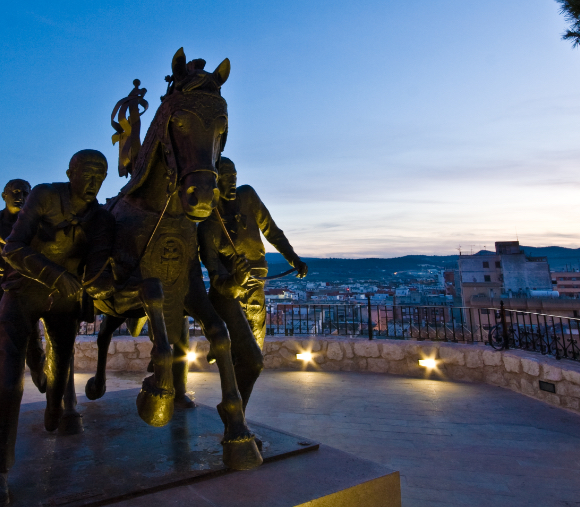
Monument to the Wine Horses
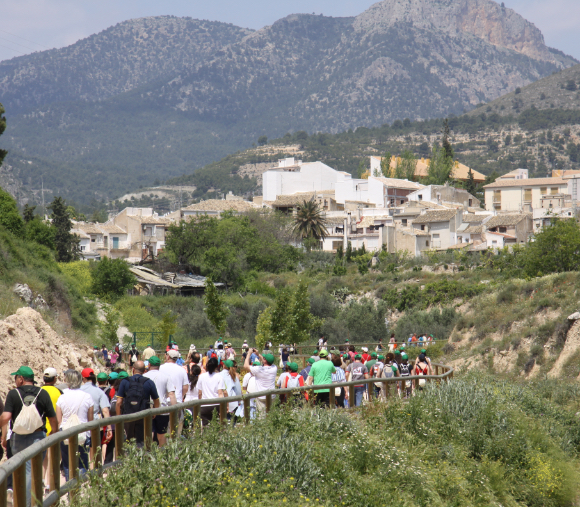
Pilgrims to Caravaca de la Cruz
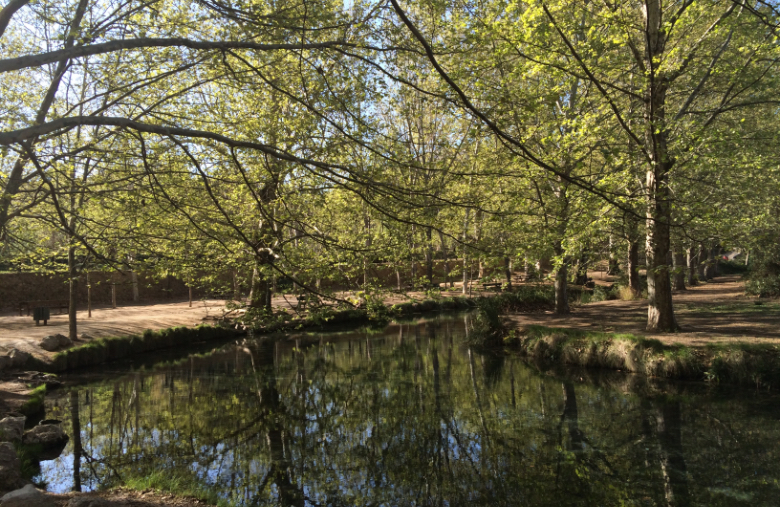
Fuente del Marqués Landscape
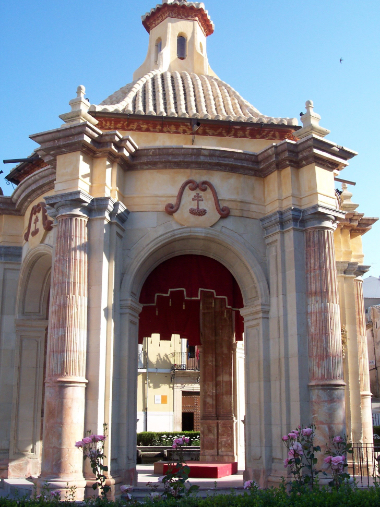
Gazebo