
Who we are
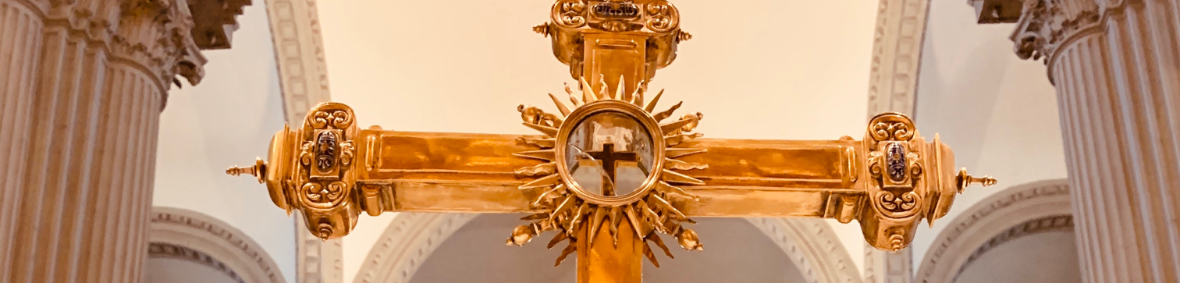
What is the spiritual path of the South?
It is a pilgrimage route with an extremely rich historical and cultural itinerary and unique landscapes, which starts in the Granada region of Guadix, Prima Sedes Hispaniae, and passes through Baza and Huéscar in the Granada highlands to the Royal Basilica of Caravaca de la Cruz in the Region of Murcia.
What are the three fundamental goals it pursues?
A tension between memories of the past and commitment to the reality of the present, linking the geography and landscape of the route to its history, cultural and spiritual heritage, and reviving a sense of transcendence, thereby rooting its inhabitants and visitors.
To encourage pilgrimage through a physical journey along the route, allowing pilgrims to encounter nature and their Creator, and through an inner or spiritual journey which, amid difficulties, ailments and efforts, but also many satisfactions, can provide pilgrims, in the light of the Cross, with a new horizon in their lives and a greater meaning and sense of purpose.
Promote population growth and settlement through projects and proposals that will boost tourism and culture in the region, foster cohesion among all social agents, public administrations, businesspeople, development groups, private associations and, of course, the inhabitants of the municipalities of the Diocese of Guadix and Cartagena-Murcia, the dissemination of its cultural, historical and environmental heritage, and contribute to its economic revitalisation.
Why the Southern Spiritual Path is important
a) It constitutes a personal proposal for external and internal adventure, for silence and listening, for searching and finding, for meaning and beauty, for the Cross and Light; for experiencing, deepening and spreading Christian spirituality; for highlighting the origins of Christianity in Spain and rekindling everyone's interest in the Gospel, promoting formation in spiritual values. It is an opportunity to restore Christian significance to visitors and pilgrims and to encourage personal encounter and attention to what is truly Real.
b) It involves the enhancement and recovery, in its true sense, of an important cultural and spiritual heritage of the territory of Granada and Murcia that is covered, and a call for the improvement of knowledge, study, research and dissemination of the natural, landscape, historical, artistic, gastronomic, cultural, spiritual and religious heritage linked to the geographical area traced by the Spiritual Way.
c) It promotes coexistence between the residents of the regions along the Way and those who visit them, strengthening relationships between them and allowing pilgrims and visitors to enjoy the aspects that most appeal to them according to their culture and preferences.
d) It promotes cohesion among territories that have historically maintained close ties, sharing culture, history and spirituality, and offers residents and visitors a profound and transcendent meaning of life through their rich natural, monumental and religious heritage, as well as solidarity and a deep connection between people and the territory.
What effects are expected in the area?
The mark of a profound and comprehensive experiential journey for individuals in all dimensions, guiding and inspiring their lives.
A sense of belonging among the population, with an awareness of the value of their territory.
Cultural and economic development.
Dissemination, projection and promotion of natural and cultural heritage abroad.
Cohesion of the populations and all the social agents that are integrated along the way.
Which 17 municipalities does it cover?
The geographical route is structured around three key landmarks at the beginning, middle and end of the journey:
- Guadix, as a particularly significant diocese due to being the oldest in Spain, together with the Diocesan Shrine of Face Retama
- Huéscar, with its collegiate church of Santa María Mayor de la Encarnación, which enjoys the privilege of being a perpetual jubilee temple by grace of Pope Benedict XVI, and which houses a lignum crucis,
- Carava de la Cruz, where another more famous lignum crucis is also preserved in its Royal Basilica Sanctuary, and enjoying the distinction of being one of the few famous holy cities in the world, now a traditional destination for numerous pilgrims.
The following municipalities are to be visited in the order of passing through:
Guadix, Benalúa de Guadix, Fonelas, Villanueva de las Torres, Gorafe, Bácor-Oliva, Freila, Baza, Zújar, Benamaurel, Cúllar, Orce, Galera, Huéscar, Puebla de Don Fadrique, Moratalla and Caravaca de la Cruz.
In which fundamental areas does it occur (desert, orchard, plain, etc.)?
Part of the so-called Hoya de Guadix, from the top of this city, at the Padre Poveda viewpoint in the cave district, from where you can see the old wall of the citadel, the Cathedral and part of the road to Benalúa, which then continues towards Face Retama, in the middle of quasi-desert lands, where tradition places San Torcuato, one of the seven apostolic men who began the Christianisation of Spain; it continues to cross the Gorafe desert, a territory with a spectacular amalgam of shapes and colours between gullies and ravines, now called badlands. These lands have been steeped in spirituality since ancient times, as evidenced by a megalithic park with more than 200 dolmens.
Continue along the route through areas where water flows, such as Villanueva de las Torres, where you will find the Alicún de las Torres spa. In the distance, we will see the Negratín reservoir and the omnipresent Pico Jabalcón. We will reach the town of Gorafe and continue through the same landscape until we reach Bácor, where we will see what was once an important defensive line of the Nasrid Kingdom of Granada. Moving on towards Freila, we will enjoy its castles, numerous watchtowers and algarbes (fortified granaries), and continue to see the badlands of the Gorafe desert, highly eroded clay that offers different shades and sensations depending on the light at the time of day. Nearby Freila offers a magnificent inland beach next to the waters of the Negratín reservoir. The route continues towards the Baza basin, passing through this town on a slope of the Sierra de Baza, and then returns to the summit of El Jabalcón, where the Virgen de la Cabeza chapel is located. During the ascent, you can enjoy a wide panoramic view, where the almost desert-like landscape contrasts with small irrigated areas and the waters of the Negratín reservoir. In the distance, the imposing 2,381-metre-high Mount Sagra stands out. The route descends towards Zújar, famous for its thermal waters, and continues through semi-desert areas, Benamaurel, Cúllar, also with its areas of orchards, with the remains of ancient watchtowers and ruined castles in its surroundings, or fortresses such as when you reach Orce, famous because in 1982 the remains of what were possibly the first settlers in Europe a million and a half years ago were discovered.
Continue along the road to Galera, a semi-desert region with a network of fertile valleys flanked by gullies, creating a unique landscape. Once again, there is a natural pool in the municipality of Huéscar, a town with a famous collegiate church, and in the distance, the Marmolance, Seca and Sagra mountain ranges, and nearby, the Encantada mountain range, where there was once a castle, the genesis of the town. Throughout the route, there are numerous caves, some abandoned but many others still inhabited. Along the way, there are also numerous watchtowers and remains of ancient castles, reminding us that this was a border territory, including the very significant border between Castile and the Nasrids. In addition, the spectacular landscape along the route is home to one of the best continental geological records of the last 5 million years. Among other treasures, this record contains the most complete set of fossil remains of the large extinct mammals that lived during the Quaternary Period (the last 2.5 million years of Earth's history, when humanity appeared on the planet), which has led to its declaration as a UNESCO Global Geopark (10 July 2020).
Continue along the road to Galera, a semi-desert region with a network of fertile valleys flanked by gullies, creating a unique landscape. Once again, there is a natural pool in the municipality of Huéscar, a town with a famous collegiate church, and in the distance, the Marmolance, Seca and Sagra mountain ranges, and nearby, the Encantada mountain range, where there was once a castle, the genesis of the town. Throughout the route, there are numerous caves, some abandoned but many others still inhabited. Along the way, there are also numerous watchtowers and remains of ancient castles, reminding us that this was a border territory, including the very significant border between Castile and the Nasrids. In addition, the spectacular landscape along the route is home to one of the best continental geological records of the last 5 million years. Among other treasures, this record contains the most complete set of fossil remains of the large extinct mammals that lived during the Quaternary Period (the last 2.5 million years of Earth's history, when humanity appeared on the planet), which has led to its declaration as a UNESCO Global Geopark (10 July 2020).
Some of the most significant sites on the Southern Spiritual Trail:
1.- Guadix: Padre Poveda viewpoint, from where you can see numerous inhabited caves, the old Alcazaba and Guadix Cathedral.
2.- Guadix Cathedral.
3.- Gor: 17th-century parish church, which houses paintings and sculptures from that period, its beautiful square with Castilian arcades, and the Los Siete Caños fountain.
4.- Benalua: Cerro Kabila viewpoint, offering beautiful panoramic views, and the Church of El Carmen.
5.- Face Retama, linked to the figure of San Torcuato.
6.- Fonelas: Church of the Annunciation and the Fardes River Valley Palaeontological Station.
7.- Alicún de las Torres Spa and Toril irrigation channel.
8.- Mirador del Puntal de Don Diego viewpoint overlooking the Gorafe desert.
9.- Gorafe megalithic park.
10.- Bácor Olivar: Arab castle and algarves
11.- Freila: Church of Nuestra Señora de la Anunciación, Nasrid castle and inland beach at El Negratín.
12.- Baza: Main church and archaeological museum
13.- Jabalcón hill and Virgen de la Cabeza chapel
14.- Zújar: Church of the Annunciation, Baths of Zújar
15.- Benamaurel: Almohad Hafas and Torrejón Watchtower.
16.- Cúllar: Alabí Tower, Quitasueños complex and Kaikuta fountain
17.- Orce: Castle of the Seven Towers, Church of Santa María and the Interpretation Centre of the First Settlers of Europe.
18.- Cortes de Baza: Hermitage of San Roque and Hermitage of Santa Cruz
19.- Castilléjar: see the palaeoseismites and Iberian settlement of Castro de la Balunca.
20.- Galera: archaeological sites of Castellón Alto and the Necropolis of Tútugi.
21. Fuencaliente natural pool in the municipality of Huéscar
22.- Collegiate Church of Huéscar (Jubilee temple which also preserves a lignum crucis)
23.- The long Camino de los Cipreses (Cypress Tree Path) to the Hermitage of Las Santas in the municipality of Huéscar
24.- Hermitage of Las Santas Nunilón y Alodía
25.- Sierra de la Sagra mountain range.
26.- Church of Santa María de la 5ª Angustia in Puebla de Don Fadrique.
27.- Church of San Antonio Abad and the Almaciles bridge for its symbolic value as a "bridge", bordering Murcia.
28.- Sierra de los Revolcadores.
29.- Cañada de la Cruz: Parish Church of La Purísima Concepción
30.- Archivel: Fuente de la Muralla site
31.- Las Fuentes del Marqués in Caravaca
32.- Also in Caravaca: El Templete and the Church of El Salvador, from where the ascent to the Royal Basilica begins
33.- Fortress and Royal Basilica of Caravaca
Developers
The Southern Spiritual Way is an initiative that has come about thanks to the commendable collaboration between the local authorities through which the pilgrimage route passes and civil society, represented by a large number of individuals and private entities that have worked together to make it happen, including:
la ACdP, la Real Ilustre Cofradía de la Stma. y Vera Cruz de Caravaca, la Fundación San Pablo CEU, la Fundación Ntra. Sra. del Carmen y Fundación Portillo, Alvelal, Asociación Camino espiritual - Freila, GDR Guadix, Asociación Mi mejor Baza, GDR del altiplano, ADEPA Guadix, Asociación de Empresarios de la comarca de Huéscar, Centro de Estudios Pedro Suárez, Asociación de Cuevas de Andalucía, Asociación de senderismo de Bácor, Asociación Turismo del Altiplano, Asociación Baza Histórica, Asociación cultural Raigadas, etc. y naturalmente de las Diócesis de Guadix-Baza y de Murcia-Cartagena.
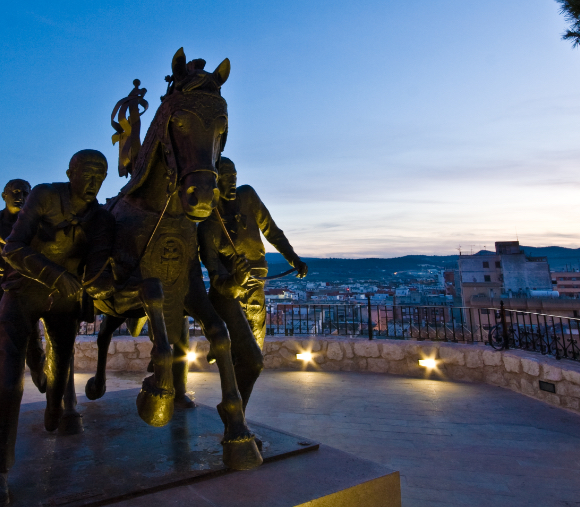
Monument to the Wine Horses
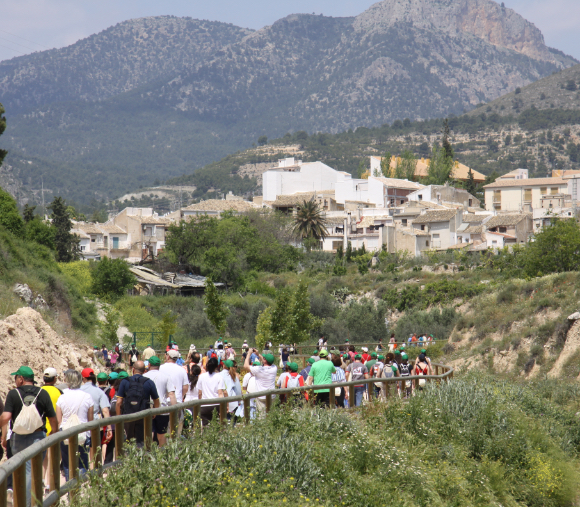
Pilgrims to Caravaca de la Cruz
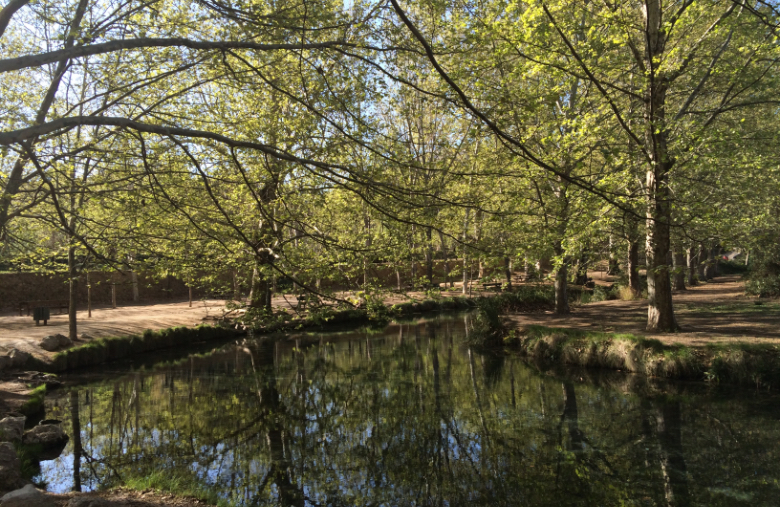
Fuente del Marqués Landscape
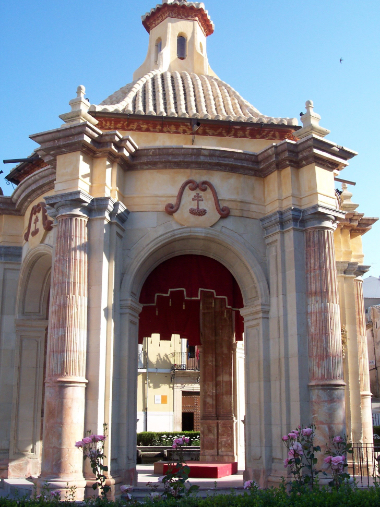
Gazebo